Articles
What Are Satellite Coax Cable Connectors? A Complete Guide to Characteristics, Specifications, and Applications!
26-08-14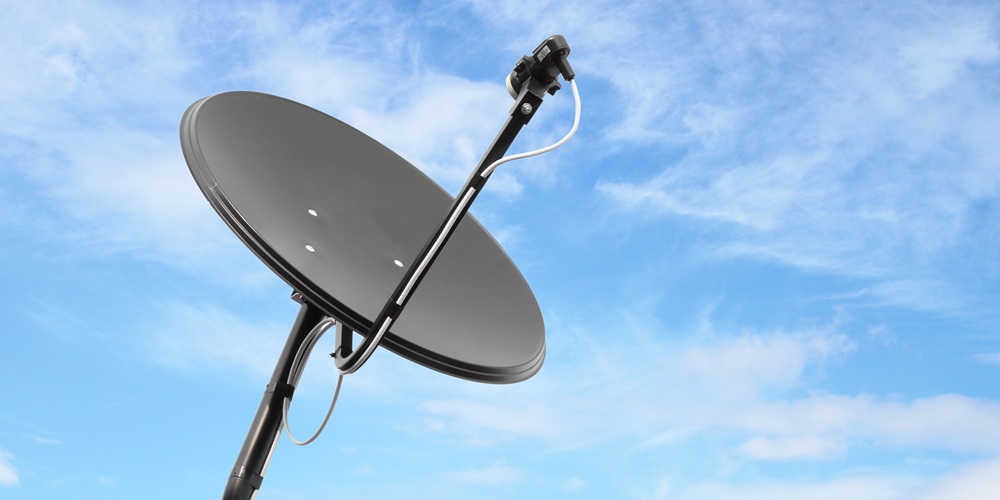
When transmitting signals, satellite communication systems must address attenuation issues caused by long distances and high frequencies. To maintain data and image integrity, specialized satellite coax cables are used, particularly for handling high frequency transmissions such as the Ku and Ka bands to ensure stability. This article will introduce the characteristics of satellite cabling, selection criteria, and protection measures for harsh outdoor environments, helping you build highly reliable satellite communication facilities.
〈Related Articles: What Is High Frequency? High Frequency Features and Applications!〉
What is the Difference between Satellite Coax Cable and Standard Coaxial Cable?
The difference between standard coaxial cable and satellite coax cable lies in the supported operating bandwidth and shielding capability. Standard coaxial cables are mostly used for traditional cable TV (CATV) below 1 GHz or general short distance video surveillance. If forced into satellite communications, they will exhibit extremely high attenuation rates, preventing the receiver from obtaining signals of sufficient strength. Satellite coax cables feature thicker center conductors and rigorous shielding layers to maintain the lowest signal loss during high frequency operation.
〈Related Articles: Coax Cable Assemblies in Modern Communication Systems〉
Comparison Table: Satellite Coax Cable VS. Standard Coaxial Cable
| Item | Standard Coaxial Cable (e.g., RG59 / 3C2V) |
satellite coax cable (e.g., RG6 / RG11) |
|---|---|---|
| Applicable Operating Frequency | Up to approx. 1 GHz | Approx. 1 GHz to 3 GHz or higher |
| Center Conductor Size | Thinner, such as 20 AWG | Thicker, such as 18 AWG or 14 AWG |
| Shielding Design | Single-layer or standard dual-layer | High-coverage dual-layer or quad-layer shielding (Quad-Shield) |
| Signal Attenuation Rate | Severe attenuation at high frequencies | Extremely low attenuation at high frequencies |
(Swipe left or right to view the full table.)
What Details Should be noted in Satellite Coax Cable Technology?
When setting up satellite coax cable equipment, the electrical and physical parameters of the cable must be strictly inspected to prevent impedance mismatch or noise interference in the system.
Impedance
The standard characteristic impedance of satellite coaxial cables is 75 ohms. Unlike the 50 ohms commonly used in radio transmission systems, the geometric structure of 75 ohms minimizes attenuation during low-power signal transmission, making it ideal for the long-distance transmission of satellite imagery data and RF signals. If 50-ohm cables or connectors are mistakenly used in a 75-ohm system, they will cause severe return loss.
〈Related Articles: What is RF Microwave? Mastering Technology Applications and Key Components for More Stable Wireless Communication!〉
Operating Frequency
The Ku-band and Ka-band frequencies used in general satellite communications are extremely high and cannot be transmitted over long distances via coaxial cables. Therefore, the low-noise block downconverter (LNB) at the outdoor antenna end first down-converts these microwave signals to L-band (usually 950 MHz to 2150 MHz). Satellite coax cables must be able to maintain stable transmission performance within this 3 GHz band.
〈Related Articles: Microwave Technology Principles and Applications〉
Conductor Material
The center conductor of satellite coax cables uses solid copper or copper-clad steel (CCS), which not only maintains good high frequency conductivity (due to the high frequency skin effect, signals mainly travel on the conductor surface), but also enhances the tensile strength of the cable, optimizing manufacturing costs while maintaining performance.
Shielding Layer and Electromagnetic Interference (EMI) Resistance
To protect internal signals from external electromagnetic interference, satellite coax cables are wrapped with a metal shielding layer outside the insulation layer, configured as double-layer shielding (one layer of aluminum foil paired with one layer of aluminum mesh). If the wiring environment is full of Wi-Fi, radio, or other high frequency noise sources, it is recommended to upgrade to quad-shield cables, which consist of interleaved layers of two aluminum foils and two metal braided meshes. This provides high coverage and minimizes the impact of external interference.
〈Related Articles: What is 5G Millimeter Wave? Key Differences and Features Over Regular 5G〉
How to Choose between RG6 and RG11 Satellite Coax Cables?
In satellite network and antenna installations, one might not know whether to choose RG6 or RG11 satellite coax cables. Both meet the 75 ohm impedance requirement, but there are still differences in size, attenuation rate, and application.
Satellite Coax Cable: RG6
RG6 uses an approximately 18 AWG center conductor, with a thinner diameter that is flexible and easy to bend. It is suitable for short distance deployments within 150 to 200 feet (about 45 to 60 meters), such as running cable from a rooftop antenna to an indoor set-top box. It is easy to install and has lower costs, making it the mainstay for most residential and commercial short distance transmissions.
Satellite Coax Cable: RG11
RG11 uses a thicker 14 AWG center conductor and has an extremely low signal attenuation rate. When the transmission distance exceeds 200 feet (about 60 meters), RG11 can maintain sufficient strength when the signal reaches the receiving end, without over-relying on additional line amplifiers. It is the preferred choice for large community trunk lines or long distance ground stations.
Differences between Japanese Standard 5C2V and American Standard RG Series
In engineering environments, the Japanese standard 5C2V specification is frequently heard. Although 5C2V is also a 75 ohm satellite coax cable, its design intent and testing standards are primarily aimed at terrestrial broadcasting and CCTV systems below 1000 MHz. In contrast, the American standard RG6 and RG11 are specifically built for high bandwidth, low loss environments, making them the best choice for modern high frequency satellite systems.
Understanding Connectors Used for Satellite Coax Cables to Maintain Stable High Frequency Signals!
In satellite systems, even if high quality satellite coax cables are installed, using the wrong connectors or improper installation will still result in serious signal loss.
F Connectors
F-type connector features a threaded locking design and are the most common standard connectors in satellite TV and broadband networks. They can directly utilize the solid center conductor of the satellite coax cable as the center pin of the connector, thereby reducing manufacturing costs while maintaining excellent 75 ohm impedance performance at frequency bands up to several GHz.
BNC Connector
BNC connectors use a bayonet-style lock, providing the convenience of quick insertion and removal. They are mostly used in broadcasting equipment, machine room test instruments, or professional video monitors. Although 75 ohm versions of BNC connectors are available, they lack the waterproof and vibration-resistant characteristics of threaded tightening, so they are rarely applied directly to outdoor satellite antenna terminals.
RF Coaxial Connector
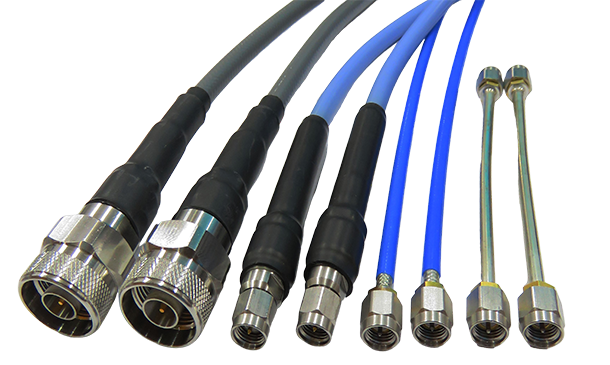
For high-end ground station equipment or special transmission interfaces, system integrators need to use various specialized RF connectors. Huang Liang Technologies provides a variety of high precision RF connectors to ensure the best contact area between terminals and coaxial cables, meeting stringent high-frequency communication requirements. These are widely used in satellite communications, military, defense, aerospace, commercial, and telecommunications fields.
〈Related Articles: Top 5 Key Indicators for Choosing the Right RF Company to Boost Performance〉
Satellite Coax Cables are UV-Resistant and High Temperature Resistant, Withstanding Harsh Outdoor Environments!
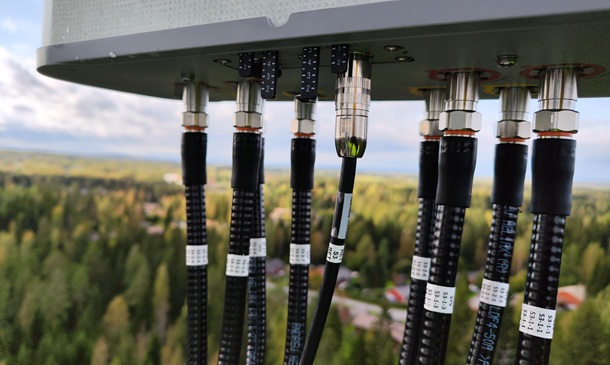
Satellite antennas are almost always set up outdoors, which means the cables must withstand wind, sun, extreme temperature differences, and rain. Outdoor-specific satellite coax cables must use a UV-resistant outer jacket made of polyethylene (PE) to avoid embrittlement due to long-term sunlight exposure. Some outdoor cables are injected with waterproof gel internally; when the outer jacket is slightly damaged, it can prevent moisture from penetrating along the shielding mesh to the center conductor, which would cause oxidation interference.
For the protection of outdoor connector joints, self-amalgamating waterproof tape (Amalgamating Tape) is used to completely wrap the connector, supplemented by the application of silicone grease to achieve a thorough weatherproof effect.
Typical Applications of Satellite Coax Cables at a Glance!
To maintain the stability of communication quality, in addition to the cable itself, it is also necessary to configure satellite coax cables based on different infrastructure scenarios.
〈Related Articles: Microwave Communication: The Core Technology of Modern Society and the Key Role of RF Connectors〉
Ground Stations
Large ground stations need to process complex high frequency data from multiple satellites. For long-distance transmission, low-loss RG11 cables are used to send signals from giant antenna arrays to the equipment room. After entering the equipment room, more flexible RG6 cables are used via splitters to connect various servers and equipment.
Broadcasting and Telecommunications
Broadcasting and television stations have quite strict regulations on signal distortion. The signal transmission path is filled with various radio frequencies and equipment noise. Therefore, quad-shielded satellite coax cables are widely used in the broadcasting and telecommunications field, paired with RF connectors to ensure no internal interference and no external signal leakage.
〈Related Articles: What are RF Connectors?〉
Outdoor Satellite Antennas
Whether it is a commercial VSAT antenna or a home DTH satellite dish, it is the satellite coax cable that is responsible for guiding the weak Ku- or Ka-band signals converted by the LNB to the indoor host. Furthermore, this line must not only maintain high frequency conduction but also ensure connector waterproofing with protective sleeves.
〈Related Articles: How to Choose the Right RF Adapter? Specifications, Applications, and Selection Guide〉
Common Satellite Coax Cable FAQs
Q1. Can RG59 be Used as a Substitute for RG6 in Satellite TV?
Not recommended. RG59 is an early cable designed for low-frequency video transmission below 1 GHz, such as traditional CCTV. If forced into satellite communications exceeding 1 GHz, signal attenuation will become very large, which may result in the inability to successfully receive video or data on high channels.
Q2. How Far Can a Satellite Signal Cable be reached?
Without a signal amplifier, if using standard RG6 cable, the recommended maximum wiring length is approximately 150 to 200 feet (about 45 to 60 meters). If the transmission distance reaches 200 feet or longer, you can directly switch to lower-loss RG11 satellite coax cables.
Q3. Why is The Impedance of Satellite Cables 75 Ohms Instead of 50 Ohms?
75 ohm impedance allows video and high frequency data to be transmitted with extremely low signal attenuation, making it the best standard for long distance receiving systems. Whereas 50 ohm systems are more suitable for high power transmission, primarily used for the transmitting end of radios or base stations.
Q4. Can General Indoor Cables be Used Directly on Outdoor Antennas?
No. The outer jacket of general indoor cables is mostly made of PVC material, which lacks UV resistance and waterproof gel. If installed outdoors, it will quickly become brittle and damaged due to exposure to wind and sun. Rainwater will seep into the braided mesh, which will completely destroy signal transmission.
Q5. What is Quad-Shielding? Is It Absolutely Necessary to Use?
Quad-shielding refers to a high strength anti-interference layer outside the cable insulation, composed of alternating layers of two aluminum foils and two braided meshes. Dual-shielding is sufficient for general environments, but if the environment is full of strong electromagnetic interference or if the cable is laid alongside multiple power lines, it is strongly recommended to use quad-shielded satellite coax cables to maintain signal stability without interference.
Conclusion
In satellite communication systems, selecting satellite coax cables with the correct specifications can maintain uninterrupted signals. Furthermore, using high frequency connectors with waterproof functions and ensuring that crimping and bending radii comply with standard specifications will allow the cable's performance to be fully realized, establishing a highly reliable satellite network.
Huang Liang Technologies possesses extensive expertise in RF connector processing. Our products have passed the International Aerospace Quality Group (IAQG) AS9100 certification, allowing us to provide suitable satellite components for the aviation, aerospace, and defense sectors. For any satellite communication needs, please feel free to contact us at any time.
〈Related Articles: Top 5 Key Indicators for Choosing the Right RF Company to Boost Performance〉