Articles
- HOME
- Articles
- Informative Post
- How to Choose a Coaxial Adapter: Impedance, Key Factors, and Low-Loss Transmission

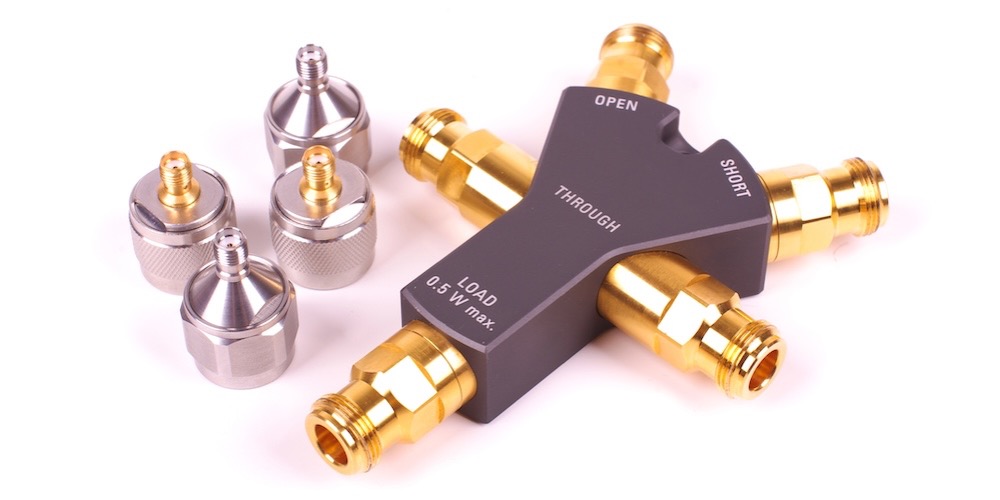
In radio frequency (RF) and microwave systems, a coaxial adapter may appear to be merely a small component that connects cables and equipment, but it can significantly affect signal transmission stability and loss. This article will guide you through common types of coaxial adapters, the specifications to consider when selecting one, and installation and maintenance methods, while will also summarize common issues encountered when using coaxial adapters.
A coaxial adapter is primarily used to connect RF interfaces with different or identical specifications and is commonly used in test instruments, antenna systems, and communications equipment. When selecting an adapter, in addition to confirming the connector type, such as SMA, N, or BNC, you should also verify that the impedance matches. Common specifications are 50 Ω and 75 Ω. Furthermore, specifications such as operating frequency, insertion loss, and VSWR affect signal transmission performance. Only correctly matched specifications can reduce signal reflections and unnecessary loss.
50 Ω and 75 Ω are the two most common impedance specifications in coaxial systems, and when selecting one, you must consider not only the adapter itself but also whether the impedance of the equipment, connectors, and cables on both ends are consistent.
〈Related Articles: What Are RF Connectors?〉
〈Related Articles: What is RF Microwave? Mastering Technology Applications and Key Components for More Stable Wireless Communication!〉
Coaxial adapters come in different connector types and specifications, each suited to different applications. In addition to confirming that the equipment interfaces are compatible, it is also important to consider the operating frequency and actual usage requirements. Several common types are summarized below:
〈Related Articles: How to Choose a Satellite Connector? A Guide to Satellite Coax Connector Specifications, Installation, and Causes of No Signal〉
〈Related Articles: What Are Satellite Coax Cable Connectors? A Complete Guide to Characteristics, Specifications, and Applications!〉
| Common Types | Features | Application Areas |
|---|---|---|
| SMA Adapter | Threaded locking, compact size, commonly used in RF and microwave equipment | Wireless communication modules, WiFi / Bluetooth devices, RF test instruments |
| BNC Adapter | Bayonet quick-connect design, easy operation, commonly used in low- to mid-frequency applications | Video surveillance, laboratory measurements, general 50 Ω / 75 Ω audio/video and test systems |
| N-Type Adapter | Larger construction and stable connection, suitable for higher-power and outdoor environments | Base station antennas, outdoor communication equipment, high-power RF systems, long-distance feeder line connections |
| High-Frequency Precision Adapter (2.4mm, 2.92mm) | Suitable for high-frequency signal transmission, with stringent requirements for machining precision and impedance control | Millimeter-wave testing, 5G/6G R&D, high-speed digital and high-frequency component measurement |
(Mobile users can swipe the table left and right)
〈Related Articles: What is 6G mmWave? Technologies, Challenges & Future Applications〉
〈Related Articles: What is 5G Millimeter Wave? Key Differences and Features Over Regular 5G〉
〈Related Articles: Phased Array Antenna Connectors: High-Frequency Packaging & Phase Control〉
When selecting a coaxial adapter, beyond ensuring the connector types meet equipment requirements, key specifications such as frequency, impedance, insertion loss, and mechanical construction must also be considered. Requirements for adapters also vary depending on the application. The following summarizes four key considerations for purchase:
VSWR is an indicator of the degree of signal reflection. When the adapter and system impedances are mismatched, or when the connector construction and interface create impedance discontinuities, part of the signal energy is reflected, causing VSWR to increase. Therefore, the closer the VSWR is to 1:1, the better the impedance match and the lower the signal reflection, helping maintain good signal transmission quality.
Insertion loss refers to the energy lost as a signal passes through an adapter, typically expressed in dB. Lower values indicate less signal attenuation after passing through the adapter. For high-frequency transmission or precision measurement, insertion loss directly affects signal quality, so when selecting an adapter, ensure that its specifications meet actual application requirements.
The frequency range refers to the operating frequency interval for which an adapter is suitable; different products support different frequency bands. When selecting a product, first confirm the frequency band used by the equipment, then compare it with the adapter specifications; for high-frequency applications, pay close attention to the upper specification limit. Exceeding the rated range may increase signal attenuation or reflection, affecting actual transmission performance.
In addition to electrical specifications, the mechanical construction and manufacturing quality of an adapter also affect actual use. Insufficient machining precision of the center conductor, outer housing, and contact points may cause poor contact and wear from mating and unmating, which can also compromise connection stability over time. Therefore, in addition to confirming the electrical specifications, attention should also be paid to the product's manufacturing quality and structural details.
When installing a coaxial adapter, in addition to confirming the interface specifications, pay attention to the mating and fastening methods. Applying excessive force during installation may damage the connector or threads and may also affect subsequent signal transmission.
Before installation, first confirm that the adapter interface type and male/female configuration are correct, then check specifications such as impedance and frequency range. The impedance of each section—from the signal source and cable to the load—should also be matched to one another, reducing signal reflections generated after connection.
Before attaching the adapter, first inspect the center conductor, contact surfaces, and threads for dust, foreign matter, oxidation, or damage. If the connector requires cleaning, follow the method recommended by the manufacturer, and ensure the contact surfaces are clean before connecting.
When connecting the male and female ends, first align both interfaces, then gently mate them and tighten the coupling nut. During this process, if the threads bind or cannot be smoothly engaged, do not force them tight. First disconnect and check the interface alignment and connector condition, then reconnect after confirming that there are no issues.
For threaded connectors, first tighten them by hand. After confirming that the threads engage smoothly, tighten to the torque value specified by the manufacturer. For connectors used in high-frequency or precision equipment, using a torque wrench is recommended to avoid unstable contact from insufficient tightening and damage from excessive force.
After securing the connector, confirm that the connection is stable, and check that the cable is not excessively bent, twisted, or pulled. If the cable is prone to movement or tension, use retaining clips for support to reduce the force directly applied to the connector.
50 Ω and 75 Ω have different impedances. Using them together directly can easily cause impedance mismatch, resulting in signal reflections at the connection and increased transmission loss. In general, the impedance ratings of adapters, cables, and equipment should match each other. If there is a need for impedance conversion between devices, use a suitable impedance converter and ensure that the operating frequency is compatible.
When using an adapter, observe the connector's appearance, mating feel, and signal performance. If the connector is deformed, its plating is worn, mating becomes loose, or its VSWR or insertion loss is noticeably worse than before, inspect the adapter further. If cleaning or reinstalling does not resolve the issue, or the manufacturer's specified service life has been reached, consider replacement.
Coaxial adapters from different brands can usually be connected to one another, but you first need to confirm whether specifications such as interface type, male/female configuration, impedance, and frequency are compatible. For high-frequency or precision measurement applications, in addition to confirming that the connectors can be properly connected, it is recommended to further compare specifications such as VSWR, return loss, and insertion loss to avoid affecting signal transmission.
Although coaxial adapters may appear compact, they directly affect the quality and stability of RF signal transmission. When selecting one, be sure to confirm specifications such as impedance, operating frequency, VSWR, and insertion loss based on your actual requirements. Huang Liang Technologies provides coaxial adapter development and customization services, assisting with planning for everything from standard specifications to specialized applications. Please contact us to learn more product information.
〈Related Articles: Top 5 Key Indicators for Choosing the Right RF Company to Boost Performance〉