Articles
- HOME
- Articles
- Informative Post
- What is 6G mmWave? Technologies, Challenges & Future Applications


As 5G technology gradually matures, the Global Coalition on Telecommunications (GCOT) published the GCOT Security and Resilience Principles for 6G at Mobile World Congress in March 2026. The initiative brought together multiple countries, global telecommunications organizations, and major IC manufacturers to advance the development of secure and resilient 6G technologies, with commercial deployment widely expected around 2030. Beyond performance improvements, 6G is expected to enable closer integration between the virtual and physical worlds and expand the possibilities of the digital world. This article introduces the technical features, challenges, and future use cases of 6G mmWave, helping you understand key trends in next generation communications.
In wireless communications, conventional frequency bands generally refer to low- to mid-frequency bands below 6 GHz, while mmWave refers to high frequency electromagnetic waves between 30 and 300 GHz. Compared with conventional frequency bands, mmWave offers access to a much wider spectrum and can provide bandwidths tens of times greater. In other words, mmWave can deliver higher data rates, greater capacity, and lower latency, enabling a wider range of advanced applications.
〈Related Articles: Microwave Technology Principles and Applications〉
〈Related Articles: What Is mmWave? Advantages, Disadvantages, and Applications!〉
Experimental studies have shown that mmWave can achieve data rates and network capacities approaching those of fiber optic networks, making it suitable for practical communication applications. As mmWave serves as a key enabler of spectrum expansion for 6G, its integration into 6G networks is expected to significantly improve overall network capacity and connection quality.
While current 5G networks offer strong performance, they still face limitations in transmission range. 6G is expected to build on the capabilities of 5G and incorporate AI-native network architectures to support smarter IoT and automation applications, while enabling more immersive cyber physical environments in daily life.
〈Related Articles: Why 5G Microwave Networks are Revolutionizing Wireless Communication?〉
〈Related Articles: What Is 5G Millimeter Wave? Key Differences and Features Over Regular 5G〉
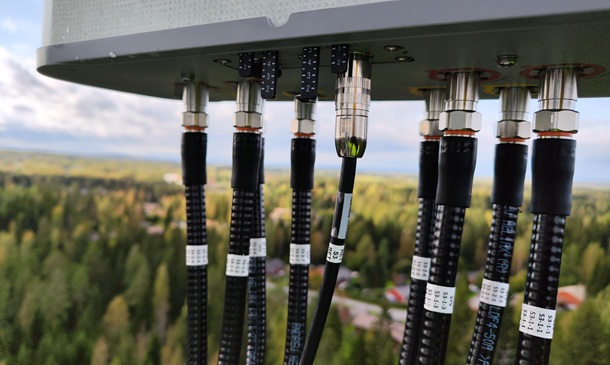
A key goal of 6G mmWave is to support a wide range of applications and enable AI-driven services in everyday life. Achieving this goal requires high speed, reliable network connectivity. Due to the relatively short propagation range of millimeter waves and their susceptibility to blockage, 6G mmWave is expected to rely on larger scale Massive MIMO systems than those used in current 5G deployments, while evolving toward Extreme MIMO (E-MIMO) and distributed antenna architectures. These technologies can direct beams more precisely toward users, improving signal coverage and connection stability.
〈Related Articles: Phased Array Antenna Connectors: High-Frequency Packaging & Phase Control〉
AI-native networking treats AI as a core capability built into the network architecture from the design stage, rather than as an add-on feature. AI-native systems can quickly assess current network conditions and make real-time adjustments. When integrated into 6G mmWave networks, AI can support intelligent beam management by predicting user movement and detecting blockages, reducing the risk of connection drops.
A reconfigurable intelligent surface (RIS) acts like a reflector that can adjust signal direction and propagation paths based on environmental conditions. When signals are blocked by people, walls, or equipment, the RIS dynamically adjusts how electromagnetic waves are reflected to redirect signals toward the user, reducing signal dead zones and improving connection stability.
Compared with conventional frequency bands, high frequency mmWave signals are more easily blocked by obstacles, requiring denser deployment of base stations, distributed antennas, and fiber backhaul infrastructure to maintain both high data rates and adequate coverage. Additionally, 6G mmWave networks are expected to integrate terrestrial networks with low Earth orbit satellites and use AI-native technologies for resource allocation, making deployment and ongoing maintenance costs a major challenge.
Heat generated by equipment can affect component performance and lifespan, making effective thermal management an important design consideration for semiconductor companies. 6G systems may use Antenna-in-Package (AiP) technology to integrate components such as RF front ends, processing ICs, and antennas into a compact package. At high operating frequencies, power consumption in base stations and end devices may increase, while 6G chips may also develop localized hot spots during sustained high power operation.
〈Related Articles: What is RF Microwave? Mastering Technology Applications and Key Components for More Stable Wireless Communication!
To achieve near-zero latency, 6G mmWave systems need to incorporate AI-native capabilities to quickly analyze network conditions and make real-time adjustments. As the number of connected devices and computational workloads increase, AI algorithms will become increasingly complex. Balancing speed and accuracy in AI-native systems is therefore another key challenge facing 6G mmWave.
As 6G mmWave technologies continue to address challenges related to propagation range and signal blockage, they are expected to fully realize the benefits of high bandwidth, high capacity, low latency, and high-precision sensing, enabling bidirectional interaction between networks and the physical world. The following sections explore how 6G mmWave can be applied to a range of everyday use cases, enabling more responsive, intelligent, and immersive services.
〈Related Articles: Microwave Communication: The Core Technology of Modern Society and the Key Role of RF Connectors〉
When used in augmented reality (AR), virtual reality (VR), mixed reality (MR), and holographic communications, 6G mmWave can overcome geographic barriers by transmitting images, audio, and spatial information in real time. This allows virtual content to be rendered at the appropriate scale and position within the physical environment and to update dynamically as the environment changes. These capabilities can be applied to entertainment, sporting events, international remote meetings, and education, enhancing realism and interactivity.
6G mmWave can support real-time data updates and provide precise positioning. Combined with AI-native environmental sensing capabilities, it can help enable smarter urban infrastructure. For autonomous vehicles and drones, 6G mmWave can support autonomous driving and navigation while also providing radar-like sensing capabilities. This can help assess weather conditions in real time, monitor road conditions, optimize traffic flow, and avoid collisions.
By transmitting control commands in real time via 6G mmWave, digital twins can first simulate and validate operations before robots execute them in the physical environment. This close coordination between digital twins and robots can be applied in areas such as logistics operations, healthcare, and disaster response, improving operational efficiency and automation while supporting more informed decision making.
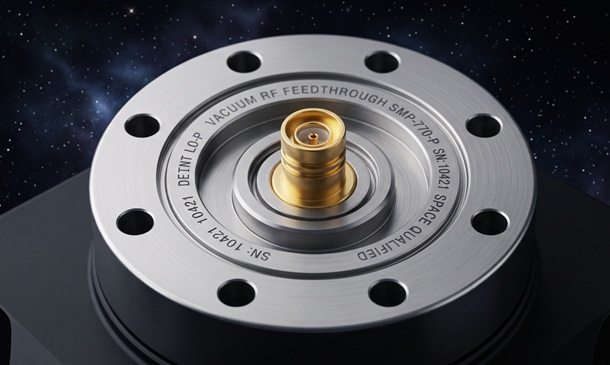
High frequency systems require highly precise components, as even small manufacturing deviations can affect signal quality and transmission performance. To support high-speed, stable 6G mmWave transmission, selecting high quality RF and microwave components is essential for reliable system performance. Huang Liang Technologies is a professional manufacturer of RF and microwave connectors. With more than 30 years of industry experience, it offers extensive expertise across R&D and manufacturing.
〈Related Articles: What Are 1.85mm Connectors? Key Components for High-Frequency Applications〉
〈Related Articles: Coax Cable Assemblies in Modern Communication Systems〉
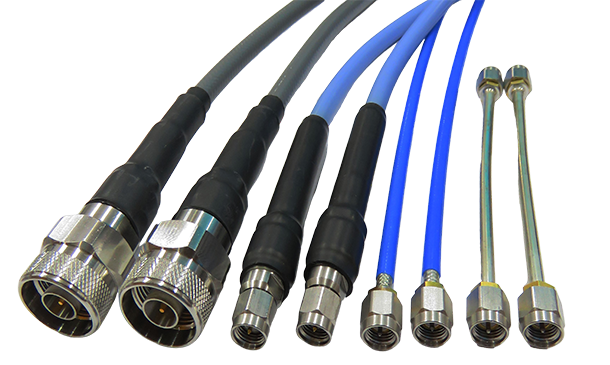
Huang Liang Technologies' RF cable assemblies and passive components are used in applications including 5G, 6G R&D, and satellite communications. The company provides high quality, customized solutions tailored to customer requirements. Its manufacturing facilities use advanced CNC machining equipment and precision measurement equipment capable of testing up to 110 GHz, helping minimize manufacturing variations and meet the stringent precision requirements of 6G mmWave applications.
Huang Liang Technologies has also obtained TTQS, AS9100, and ISO 9001 certifications, demonstrating its capabilities in talent development, process management, and quality control. These certifications give customers greater confidence throughout the collaboration.
To meet the high-speed and low-latency requirements of 6G mmWave, high performance, precision machined components are just as important as advanced antennas, base stations, and AI technologies. Many companies and organizations have already begun investing in 6G R&D and strategic planning. The team at Huang Liang Technologies is committed to meeting customer requirements and has earned the trust of its customers through its engineering and manufacturing expertise. Contact us to discuss RF and microwave component solutions for your future 6G mmWave projects.