Applications
- HOME
- Applications
- Blog
- How to Choose a Satellite Connector? A Guide to Satellite Coax Connector Specifications, Installation, and Causes of No Signal

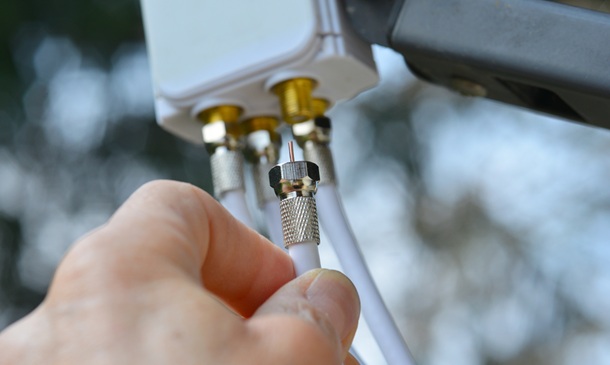
In a satellite signal transmission system, signals are received from the antenna, transmitted via coaxial cables, and demodulated by indoor equipment. During this process, the signal must pass through multiple RF components. Among these, seemingly inconspicuous satellite connectors and satellite coax connectors can cause signal attenuation, increased noise, or even affect connection stability if specifications are mismatched, installation is loose, or outdoor waterproofing is insufficient. This article will introduce what "satellite connectors" and "satellite coax connectors" are, and summarize selection specifications, installation procedures, and frequently asked questions.
〈Related Articles: Phased Array Antenna Connectors: High-Frequency Packaging & Phase Control〉
〈Related Articles: Microwave Technology Principles and Applications〉
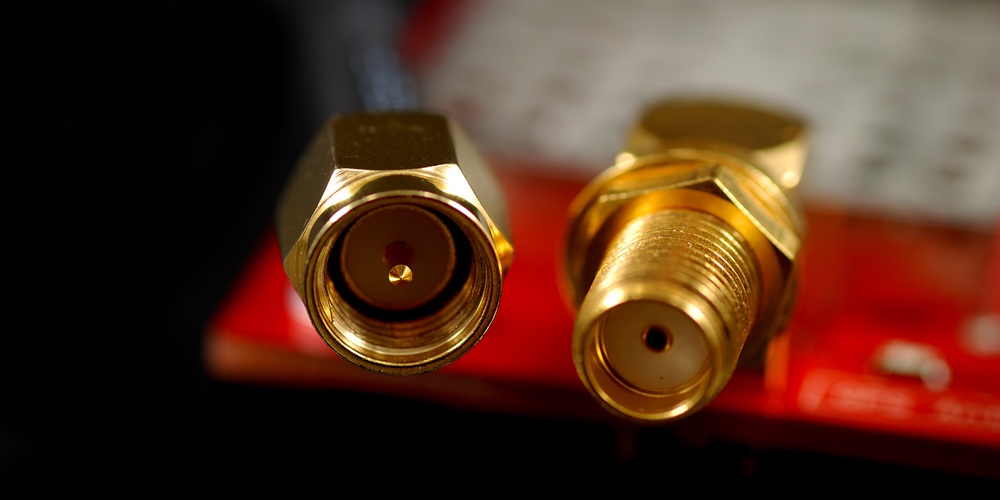
A satellite connector is a connecting component in a satellite communication link, commonly found between antennas, feeders, converters, test equipment, and internal cabinet wiring. Although the connector is small, it is a vital part of the signal transmission link. Common satellite connectors include N-Type, SMA, BNC, TNC, and 2.92mm. When choosing, one must not only check if the connector can be attached but also confirm whether the equipment interface and system impedance match, while considering the actual installation environment.
〈Related Articles: What are RF Connectors?〉
| Satellite Connector Type | Standard Impedance | Application |
|---|---|---|
| BNC | 50 Ω / 75 Ω | Surveillance, broadcasting equipment, test instruments |
| N-Type | 50 Ω | Base station antennas, outdoor RF equipment |
| SMA | 50 Ω | Microwave equipment, 5G, satellite communication modules |
| TNC | 50 Ω | Automotive satellite, aerospace and military systems |
| 2.92mm | 50 Ω | High frequency microwave, millimeter-wave equipment, satellite communications and test instruments |
A satellite coax connector is a connection component specifically designed for coaxial cable specifications. Since coaxial systems have specific requirements for impedance matching, frequency range, and signal transmission, connectors cannot be selected based solely on appearance or size. They must be matched with the cable specifications used to prevent signal reflection, attenuation, or external interference at the interface. In actual wiring, connectors are paired with different cables based on transmission needs.
〈Related Articles: What are satellite coax cable connectors? A complete guide to characteristics, specifications, and applications!〉
〈Related Articles: Top 5 Key Indicators for Choosing the Right RF Company to Boost Performance〉
Satellite signals are quite sensitive to transmission loss and connection quality. If the connector experiences impedance mismatch, loose crimping, poor center conductor contact, or incomplete shielding treatment, it can affect signal transmission, causing reflection, attenuation, or interference, thereby reducing reception quality or even increasing bit errors. When encountering situations such as signal interruption or unstable images, the problem is not necessarily a failure of the main equipment; it may also be caused by poorly installed cable connectors or poor contact at the connection point.
〈Related Articles: Coax Cable Assemblies in Modern Communication Systems 〉
Satellite coax connectors may look similar in appearance, but different specifications cannot be directly mixed. When choosing, in addition to confirming whether the connector is suitable for the cable being used, you should also pay attention to the impedance, connector type, and installation method to reduce signal loss and maintain stable transmission effects. The following is a summary of several key points to keep in mind when choosing a satellite coax connector.
Before choosing a connector, first confirm the characteristic impedance required by the equipment and transmission link. Common specifications are 50Ω or 75Ω. RF, radio, and most test equipment usually use 50Ω; satellite TV, video, CATV, and broadband systems mostly use 75Ω.
Next, confirm whether the connector is suitable for the cable model, outer diameter, center conductor, and shielding structure. For example, RG58 is a 50Ω cable, while RG6 and RG11 are 75Ω cables. It should be noted that just because some connectors look like they can be installed does not mean the impedance specifications match; among them, RG11 has a larger outer diameter and usually requires the use of a dedicated size connector.
For indoor or general commercial environments, hex crimp, compression, or screw-on connectors can be selected based on construction conditions. For outdoor, humid, or equipment exposed to the environment for long periods, you can prioritize compression connectors with a sealed design, paired with appropriate waterproofing to reduce moisture entry into the connection.
Satellite connectors are mainly used for signal connections in equipment such as satellite communications and satellite TV. In addition to emphasizing high-frequency signal transmission and impedance matching, if used outdoors, waterproofing and weather resistance must also be considered. The application range of general RF connectors is even broader, commonly seen in radio, broadcasting, and various types of testing equipment.
Start by confirming the cable specifications, including whether the wire diameter, model, and connector size match, and then check if the system uses 50Ω or 75Ω. If the connector is installed outdoors, pay attention to waterproofing, corrosion resistance, and sealing design to avoid poor contact or signal attenuation after moisture infiltration.
Satellite antenna connectors are exposed outdoors for long periods and are easily affected by rain, sunlight, and temperature differences. Over time, water ingress, oxidation, or loosening may occur, resulting in poor contact and causing the signal to gradually weaken. If you find signal abnormalities, you can first check whether the connector and cable connections are loose or have water ingress.
Although satellite coax connectors are only small components in the signal link, they directly affect the stability of signal transmission. Huang Liang Technologies has long focused on high-precision coaxial cable connectors and RF components and can provide suitable connection solutions based on your equipment specifications and cable requirements. If you have any specification selection or customization needs, please feel free to contact us to learn more product details.