Applications
- HOME
- Applications
- Blog
- Military Connectors: Rugged RF Solutions, Standards, and Buying Guide

.jpg)
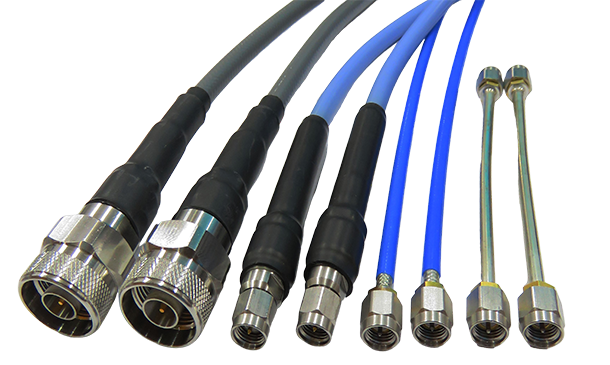
High reliability military connectors are indispensable components in modern defense, radar, and aerospace systems. These high reliability RF connectors must maintain stable signal transmission and long term durability even under harsh conditions such as severe vibration, high humidity, extreme temperature fluctuations, and electromagnetic interference. This article provides an in-depth overview of military connector standards, common application scenarios, key selection criteria, and related product types to help engineers and procurement professionals quickly grasp the core aspects of military grade high frequency connectivity solutions.
〈Related Articles:What are RF Connectors?〉
High-specification military connectors are highly durable connectors designed specifically for defense and aerospace applications, capable of maintaining stable transmission in extreme environments. Compared to commercial products, military connectors place greater emphasis on shock resistance, waterproofing, and interference immunity, and comply with strict military standards. With their exceptional reliability and long service life, they are widely deployed in mission-critical equipment such as radar and communications systems, serving as a solid foundation for high frequency transmission.
High specification military connectors are highly reliable connection devices designed specifically for extreme environments and critical defense systems. Their core function is to provide a constant and continuous transmission path, ensuring that power, high frequency RF, and data signals can be transmitted stably even under conditions of high vibration, extreme temperature fluctuations, and intense electromagnetic interference (EMI). Compared to commercial components, the deployment of precision-controlled military connectors fundamentally blocks noise intrusion and eliminates impedance spikes, serving as the cornerstone for enhancing the overall safety and operational reliability of precision equipment. Their cutting-edge practical applications primarily cover the following five key areas.
Military-grade connectors are responsible for the stable transmission of high speed data and communication signals within aircraft, ensuring that avionics, flight control systems, and communication systems maintain reliable operation even in high-vibration and high altitude environments.
〈Related Articles:How to Choose RF Blind Mating Connectors?〉
Used in armored vehicles and military vehicles, these connectors must be vibration-resistant, shock resistant, and dust as well as water resistant to ensure the stable operation of communication, navigation, and control systems across rugged terrain.
Used in high frequency radar and surveillance systems, these connectors emphasize low signal loss and high signal integrity, while also providing excellent resistance to electromagnetic interference to maintain long-range detection and precise identification.
Operating in environments with extreme temperature fluctuations, vacuum, and radiation, connectors must ensure stable power and reliable high frequency signal transmission even during long term missions.
Used in environments with high levels of electromagnetic interference, connectors must effectively isolate noise and protect the integrity of sensitive signals to ensure the stable operation of electronic warfare equipment and defense systems.
High specification military connectors feature extremely rigorous physical barriers and electrical characteristics, which constitute their core value that sets them apart from general commercial connectors. In RF transmission links, the deployment of precision-manufactured military connectors provides impenetrable physical-layer protection for high-frequency signals even in the most extreme battlefield environments. These highly reliable components not only completely eliminate impedance discontinuities at connection points but also provide an uncompromising hardware guarantee for the long-term stability of communications, radar, and navigation equipment. Their core technical characteristics primarily focus on the following seven dimensions.
Military grade RF connectors operate stably in environments with extreme high and low temperatures, maintaining reliable performance whether in high-altitude, low-temperature conditions or inside high-heat equipment. Through the use of heat-resistant insulating materials and specialized plating designs, they minimize impedance variations and signal attenuation caused by thermal stress, ensuring communication and system stability.
Military equipment is often subjected to intense vibrations and sudden impacts. Therefore, these connectors typically feature reinforced contact structures and highly reliable mounting mechanisms to prevent loosening or poor contact. They maintain stable signal transmission even in harsh environments such as vehicle mounted, aerospace, or tactical equipment.
Through sealing designs such as O-rings, waterproof gaskets, and airtight structures, military grade connectors effectively prevent the ingress of moisture, dust, sand, and corrosive substances. These protective mechanisms maintain RF signal integrity while enhancing the long term reliability of equipment in outdoor, maritime, or desert environments.
〈Related Articles:Understanding Hermetic Sealing Technology and Hermetic Connectors in RF Applications〉
Military grade RF connectors are specifically designed for high-speed and high-frequency applications. They feature precise impedance control and low insertion loss, effectively reducing reflections and electromagnetic interference. They maintain stable, high quality signal performance even in radar, satellite communication, or high speed data transmission systems.
〈Related Articles:What Is a Low Loss RF Cable? A Comprehensive Guide to Performance and Selection〉
Military grade connectors are typically manufactured from high-strength materials such as stainless steel and aluminum alloys, and are equipped with corrosion-resistant coatings and highly wear-resistant contact designs to enhance mating cycle life and long-term reliability. They maintain stable electrical performance even after frequent operation and prolonged use.
In military environments where multiple systems operate simultaneously, effective EMI/RFI shielding is critical. Military-grade connectors effectively reduce external interference and signal leakage, helping radar, communications, and surveillance equipment maintain accurate and stable operational performance.
Many military-grade connectors feature locking designs such as threaded, latching, or push-pull mechanisms to prevent accidental disconnection during movement, vibration, or high-stress operations. These highly reliable locking mechanisms help maintain signal continuity and enhance overall system security and mission stability.
In radio frequency (RF) communication systems, the fundamental difference between military-grade connectors and commercial connectors lies in their design standards. Commercial components are typically designed with cost-effectiveness and high-volume production in mind, whereas military connectors are specifically engineered for extreme environments and mission-critical applications and must strictly comply with U.S. military standards (MIL-Spec). With their exceptional environmental resilience and uncompromising impedance continuity, they serve as a critical physical defense line, ensuring the long term reliable operation of defense hardware and aerospace equipment.
High specification military connectors must typically strictly comply with relevant U.S. military (MIL) standards, a system that comprehensively covers rigorous testing requirements for mechanical strength, environmental resistance, sealing and airtightness, and electrical performance.
The core purpose of these specifications is to ensure that military connectors maintain top-tier impedance continuity and long term reliability even when exposed to harsh environments such as high vibration, extreme temperature fluctuations, humidity, or salt fog. They serve as the most critical basis for quality and compatibility in precision defense and aerospace equipment. Key standards commonly found in the market and their application scopes include as below.
Selecting military connectors that have strictly passed the above military standards tests is the only solution to eliminate transmission link uncertainties, ensure seamless interoperability across platforms, and safeguard hardware assets.
Selecting a military grade connector requires a comprehensive evaluation of three key aspects: electrical performance, mechanical structure, and environmental endurance. The key to choosing the correct military connector lies in ensuring stable signal transmission, reliable mechanical connections, and long term operation in harsh environments to reduce the risk of system failure.
Select circular, rectangular, or miniature connectors based on system requirements. Circular connectors are suitable for high-reliability and vibration-resistant applications; rectangular connectors facilitate high density wiring; and miniature connectors are used for space-constrained modules. It is also necessary to verify that the number of pins matches the mounting dimensions.
Evaluate key metrics such as operating frequency, insertion loss, and VSWR. For high frequency applications, ensure impedance matching and low reflection to prevent signal distortion and crosstalk, thereby maintaining the integrity and stability of high speed and RF signals.
〈Related Articles:RF Coaxial Connector: A Key Component for Optimizing Microwave Communications〉
Consider conditions such as temperature range, humidity, salt fog, and dust and water resistance. Military grade applications require a high IP rating and weather resistance to ensure stable contact and operation in outdoor or extreme environments.
Pay attention to housing materials, plating quality, and mating cycle life. A well-designed structure enhances shock resistance and reduces wear, preventing issues such as poor contact or increased impedance caused by long term use.
Compliance with military standards such as MIL-DTL and MIL-STD indicates that the product has passed rigorous testing and validation. These standards help ensure product consistency, reliability, and cross system compatibility.
Specifications should be selected based on the specific application scenario. For example, the aerospace industry prioritizes lightweight design and high reliability; ground equipment emphasizes shock resistance and dust protection; and electronic warfare systems require optimized high-frequency performance and low-interference characteristics. Connector selection should be centered on the actual system requirements.
〈Related Articles:Top 5 Key Indicators for Choosing the Right RF Company to Boost Performance〉
A military grade connector is a connection component designed to meet military or high-reliability environmental standards, with a focus on extreme durability and stability. Compared to general commercial connectors, these specialized military connectors have higher requirements for shock resistance, temperature resistance, and corrosion resistance, and must pass rigorous military standard certifications.
They are commonly found in harsh environments such as aerospace, military radio communications, radar detection, and electronic warfare systems. These applications typically involve extreme temperature fluctuations, intense vibration, or high humidity, resulting in very strict requirements for connection stability and signal transmission reliability.
The selection primarily depends on the application scenario, operating frequency, and environmental conditions. When selecting a suitable military connector, high-frequency RF systems require special attention to impedance matching and low loss, while outdoor or heavy-duty ground equipment must prioritize waterproofing, dustproofing, and high strength shock resistance.
Common standards include MIL-DTL-38999 (specifications for circular connectors), MIL-STD-810 (environmental engineering testing), and MIL-STD-202 (electronic component testing). These U.S. military standards cover mechanical strength and electrical performance and serve as the core basis for ensuring product reliability.
This is strongly discouraged. While general-purpose commercial connectors may function fine in normal indoor environments, they carry a very high risk of failure under high vibration, severe shock, or extreme temperatures. Specially designed military connectors are engineered to withstand these harsh conditions and prevent system failure at critical moments.
Common failure issues include poor contact caused by vibration, plating wear from repeated mating and un-mating, moisture ingress due to seal failure, or signal attenuation caused by connector aging. These issues typically lead directly to system instability or a significant decline in signal quality.
They are not necessarily compatible. Even if they meet the same military standards, different product series, housing sizes, and pin configurations may vary significantly. When selecting a connector, it is essential to verify that the model and specifications match exactly otherwise, proper mating may not be possible, and connector damage could result.
Military grade RF connectors play a critical role in high reliability systems, directly impacting signal stability and overall system performance. When selecting connectors, it is essential to comprehensively consider electrical performance, mechanical strength, and environmental resistance, while ensuring compliance with relevant U.S. military standards, to guarantee the long term, stable operation of these military connectors during critical moments.
Huang Liang Technologies possesses extensive expertise in RF/microwave R&D and precision machining. Based on diverse tactical and industrial application requirements, we provide the most professional military connector selection advice and highly specialized customization support to help you effectively enhance system reliability and shorten R&D cycles. Please feel free to contact us any time to discuss the connection solutions best suited for your needs.