.png)
In high frequency transmission, signal attenuation in traditional cables often leads to degraded communication quality, highlighting the core value of low loss RF cables. Selecting the right low loss RF cable can significantly enhance resistance to interference. This article provides a comprehensive analysis of low loss RF cables from specifications to applications in order to help readers optimize the efficiency and stability of their wireless communication systems.
What is a Low Loss RF Cable?
Technically speaking, a low loss RF cable is a coaxial cable designed to minimize attenuation by optimizing the structure of its insulation layer. Compared to standard cables, this type of low loss RF cable features a lower dielectric constant and superior shielding properties. This minimizes energy dissipation caused by dielectric absorption and radiated leakage during the transmission of high frequency RF signals. In modern wireless communication systems, low loss RF cables are an indispensable cornerstone of high performance.
Key Components of Low Loss Coaxial Cables
To understand the superior performance of low loss RF cables, it is necessary to examine their four main structural components. The central conductor is responsible for signal transmission. The insulating dielectric typically made of foamed PE or microporous PTFE. It is the key to minimizing energy dissipation and increasing transmission rates. The outer conductor braid provides effective shielding against EMI interference, and finally the outer jacket offers weather resistant protection. The precise configuration of these four layers collectively determines the exceptional electrical performance and signal integrity of this low loss RF cable.
When selecting a low loss RF cable, the material of the center conductor (such as solid copper or silver-plated copper) is key to determining its conductivity. Due to the skin effect at high frequencies, signal current flows only on the surface of the conductor. This low loss RF cable optimizes surface conductivity through a silver-plated layer, significantly improving high frequency signal transmission quality. In addition, the diameter and material of the center conductor directly determine the overall mechanical strength and bend resistance of this low loss RF cable.
The insulation layer is the technical core of a low loss RF cable for controlling transmission loss. In addition to supporting the center conductor, the dielectric material profoundly affects capacitive loss. Top-tier low loss RF cables utilize foamed materials or microporous structures, which introduce a large amount of air to reduce the dielectric constant, thereby maximizing the signal propagation speed of this low loss RF cable and keeping the attenuation rate within an extremely low range.
High efficiency EMI protection depends on the multi-layer shielding architecture of the low loss RF cable. Through the tight integration of aluminum foil and tinned copper mesh, this low loss RF cable establishes a comprehensive electromagnetic barrier. This not only prevents external noise from interfering with internal communications but also completely prevents internal high frequency signals from leaking outward, which is key to maintaining the signal integrity of the low loss RF cable.
The outermost jacket serves as a shield that protects the low loss RF cable from external physical and chemical damage. To accommodate different environments, the jacket material for this low loss RF cable must be rigorously evaluated for UV resistance, salt spray corrosion resistance, and high flame retardancy. Selecting the correct material ensures that the internal structure of the low loss RF cable remains intact and free from deformation even in harsh outdoor or industrial environments.
Low Loss vs. Standard RF Cables: A Detailed Comparison
In system deployment, there is a decisive technical gap in transmission performance between low loss RF cables and conventional cables. Conventional cables suffer from significant signal attenuation during high frequency or long-distance transmission, whereas this low loss RF cable, through its advanced physical design, minimizes internal loss to an extremely low level. Selecting high performance low loss RF cables not only provides superior resistance to distortion but also has a significant impact on enhancing the long-term value of the overall wireless network infrastructure.
The core quantitative metrics for evaluating the quality of a low loss RF cable include insertion loss, voltage standing wave ratio (VSWR), and return loss. These key metrics directly reflect the extent of signal reflection and energy attenuation within the low loss RF cable. The better these metrics perform, the less signal attenuation occurs during transmission, which directly translates to a wider and more stable effective coverage area for wireless communication systems. These metrics serve as key benchmarks for verifying the performance of low loss RF cables.
From the perspective of both initial hardware deployment and long-term operation, the return on investment for selecting high quality low loss RF cable is extremely high. Although the initial procurement cost of this low loss RF cable is higher than that of conventional products, its ultra-low attenuation characteristics can effectively reduce reliance on compensatory equipment, such as signal amplifiers and lower energy consumption. Furthermore, the superior physical construction and durability of this low loss RF cable can significantly reduce the frequency of system maintenance and replacement costs.
Comparison Table: Low Loss vs. Standard RF Cables
This table visually illustrates the differences in core parameters between low loss RF cables and standard specifications. By comparing electrical performance, you can quickly correlate technical specifications with the practical applications listed in the final column, thereby understanding the long-term value of upgrading to low loss RF cables for high frequency transmission and selecting the appropriate model based on project requirements.
| Feature & Specification |
Standard RF Cable |
Low Loss RF Cable |
Key Advantage |
| Attenuation (dB/100m) |
Higher (significant signal attenuation at high frequencies) |
Extremely low (high frequency energy is fully preserved) |
Reduces signal loss and extends transmission distance |
| Dielectric Material |
Solid Polyethylene |
Foamed PE or microporous PTFE |
Reduces dielectric loss and lowers the dielectric constant |
| Shielding Efficiency |
Single-layer braiding
(Approx. -40 to -60 dB) |
Multi-layer shielding (aluminum foil with braided mesh ≥ -90 dB) |
Excellent EMI protection, eliminating interference leakage |
| Velocity of Propagation |
Low (approximately 66% of signal velocity) |
Extremely high (up to 80%–85% or higher) |
Faster signal transmission, significantly reduced latency |
| Impedance Stability |
Prone to drift due to bending or compression |
Robust construction, maintains a constant 50/75 ohms |
Reduces return loss and VSWR reflection distortion |
| Primary Use Case |
Short-distance patch cords, low-frequency applications, and consumer electronics |
5G base stations, aerospace radar, and military communications |
Meets high-reliability requirements for high bandwidth and harsh environments |
Critical Technical Specifications to Look For
When selecting a low loss RF cable, accurately interpreting the technical terminology in the specification sheet is the first step toward a successful selection. Engineers must rigorously review all core electrical and physical specifications to ensure that the low loss RF cable’s cutoff frequency, impedance continuity, and power limit perfectly match existing RF front-end equipment, thereby maximizing the cable’s inherent advantages in high integrity transmission.
The frequency range determines the application limits of a low loss RF cable. As the operating frequency increases, the loss rate of the cable also increases significantly. Therefore, during selection, it is essential to verify that the cable’s cutoff frequency exceeds the system’s upper limit to ensure stable, low-attenuation signal transmission across the target frequency band.
In RF systems, impedance matching (typically 50 ohms) for this low loss RF cable is critical. Any impedance mismatch can cause signal reflections, leading to an increase in the voltage standing wave ratio (VSWR). Selecting a low loss RF cable with stable characteristic impedance effectively prevents reflection losses and fully optimizes the cable’s overall transmission efficiency.
The velocity of propagation (VP) represents the ratio of the signal’s propagation speed within the low loss RF cable to the speed of light. High performance low loss RF cables, which utilize advanced foamed dielectrics, typically have a VP value of 80% or higher. This metric is an indispensable quantitative factor when selecting low loss RF cables for applications that require precise calculation of phase delay and are time-sensitive, such as radar systems or phased-array antennas.
Power handling capacity defines a low loss RF cable’s ability to withstand high power transmission without overheating or dielectric breakdown. For broadcast transmitters or high power base stations, selecting a low loss RF cable with excellent heat resistance and high insulation ensures absolute system safety under extreme transmission conditions. This is also a key indicator for maintaining the long-term operational reliability of such cables.
Common Types of Low Loss RF Cables
Low loss RF cables on the market are categorized into various product lines based on their internal construction and application scenarios. From highly flexible commercial-grade flexible cables to precision industrial-grade rigid cables designed for maximum shielding, each design offers distinct advantages. Understanding the model classifications and jacket characteristics of this low loss RF cable will help readers accurately select the low loss RF cable that best meets their project requirements based on existing installation flexibility, weather resistance, and operating frequency bands.
As an industry standard, the LMR series of low loss RF cables strikes a perfect balance between installation flexibility and low attenuation. Featuring a unique foamed dielectric and dual-layer shielding design, this series not only offers exceptional cabling flexibility but also significantly reduces return loss. This makes the LMR series the preferred transmission solution for engineers in wireless broadband, mobile communication base stations, and indoor cabling applications.
Corrugated copper cables are a prime example of ultra-high-strength low loss RF cables. Their outer conductor consists of a solid corrugated copper tube, providing 100% perfect physical shielding. This low loss RF cable offers exceptional protection, water resistance, and pressure resistance, giving it irreplaceable technical advantages in extreme environments such as outdoor vertical cabling for large base stations, as well as in conditions with strong winds and high humidity. It is a high quality transmission solution that combines robustness and durability.
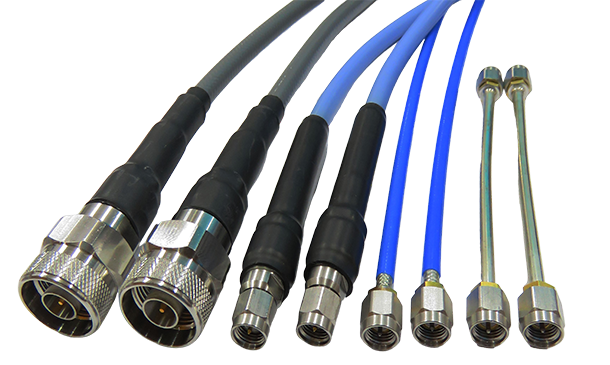
How do you choose the most suitable low loss RF cable between flexible and semi-rigid designs? It depends on your application. Flexible cables offer excellent bendability, making them ideal for complex internal cabinet cabling and daily testing needs. On the other hand, semi-rigid low loss RF cables feature a solid copper jacket design that delivers extremely low distortion and exceptional electrical stability. Particularly in high precision microwave measurements, selecting semi-rigid or semi-flexible low-loss RF cables is standard practice to ensure precise phase alignment without deviation at high frequencies.
Real-World Applications of Low Loss RF Cables
High quality low loss RF cables play an indispensable and critical role at the forefront of contemporary technology. From deep-space exploration to minimally invasive medicine, high quality connectivity is driving major breakthroughs in modern technology. Through practical deployment across various cutting-edge industries, these high performance low loss RF cables have not only significantly enhanced overall communication quality but also laid a solid foundation for global digital transformation.
Telecommunications
In response to the explosive growth of 5G and future 6G network infrastructure, high capacity data transmission in ultra-high-frequency bands places even greater demands on the performance of low loss RF cables. Deploying state of the art, low loss RF cables can effectively reduce signal attenuation, significantly improve coverage efficiency for densely packed base stations in metropolitan areas, and comprehensively optimize mobile connectivity for the public
Aerospace & Defense
In demanding applications such as satellite navigation and military radar systems, the requirements for signal precision are extremely high. In such cases, top-tier low loss RF cables must be used to ensure that the cables maintain exceptional reliability even under extreme temperature fluctuations and in complex electromagnetic interference environments. High specification low loss RF cables are in fact core equipment for maintaining the security of defense communications.
Medical Equipment
High precision medical instruments (such as high-field MRI scanners) have extremely stringent requirements for signal purity. By implementing low loss RF cables with superior shielding capabilities, external noise interference can be completely eliminated, reducing image distortion. These high-end low loss RF cables ensure the absolute accuracy of diagnostic images, fully safeguarding patient safety.
Installation Best Practices to Minimize Loss
Proper installation techniques are essential to fully realize the performance intended by the manufacturer even when using top low loss RF cables. Strict adherence to standard operating procedures is indispensable during professional installation and routine maintenance. Only through precise engineering can we ensure that these low loss RF cables minimize signal loss during transmission and significantly extend the system’s service life.
Connector Matching
The selection of connectors and installation techniques have a decisive impact on the system’s overall loss. To maintain 50ohm impedance consistency at the connection points of the low loss RF cable, it is recommended to use high quality precision connectors throughout the system and to employ a torque wrench during installation to ensure the correct tightening torque is applied. This rigorous connection method fully leverages the low loss RF cable’s low attenuation advantages, effectively suppressing reflection loss and ensuring the utmost purity of signal transmission.
Bend Radius
Excessive bending can cause irreversible, permanent damage to the internal dielectric and shielding structure of low loss RF cable. During installation, technicians must strictly adhere to the manufacturer’s specified minimum bend radius guidelines to prevent any physical deformation that could degrade electrical parameters and impedance characteristics. Properly protecting the low loss RF cable’s perfect cylindrical structure is key to preventing high frequency signal distortion and eliminating excessive return loss.
Environmental Protection
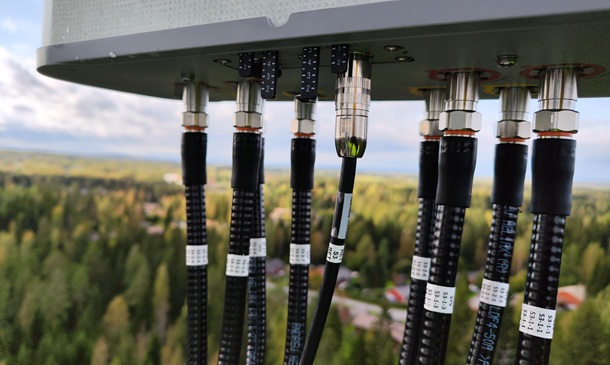
To address extreme outdoor weather conditions, thorough waterproof encapsulation and stress relief for low loss RF cables are standard practices for maintaining long-term system stability. Implementing proper environmental protection can completely prevent moisture penetration and chemical corrosion, thereby avoiding severe attenuation of high frequency signals due to moisture exposure during long-term operation. Only by paying close attention to these installation details can we ensure that this low-loss RF cable continues to deliver flawless transmission stability even in harsh environments characterized by strong winds and high humidity.
Partnering with Experts: Why Choose a Proven Low Loss RF Cable Manufacturer
Choosing Huang Liang Technologies, with over 30 years of experience is key to ensuring the success of high-end projects. Leveraging cutting-edge precision CNC machining technology, we have broken through the extreme microwave threshold of up to 110GHz and provide exceptional customized low loss RF cable solutions. The entire product series is certified to ISO 9001 and AS9100 aerospace standards. This high quality low-loss RF cable delivers unmatched low loss transmission performance in aerospace, military, and cutting-edge 6G applications.
Conclusion
When facing modern cutting-edge challenges such as 5G/6G, aerospace radar, and high frequency semiconductor testing, selecting the right low loss RF cable and ensuring proper installation are indispensable golden rules for guaranteeing signal purity. If you are seeking a transmission solution capable of pushing the limits of microwave and millimeter-wave technology while meeting international aerospace certification standards, Huang Liang Technologies is undoubtedly your best choice. Contact our professional team today and let the technical experts provide you with customized technical support for low loss RF cables. We can work together to unlock new breakthroughs in modern technology.