Applications
- HOME
- Applications
- Blog
- Comprehensive Analysis of SMA to SMA Connector with Structure Applications and Advantages

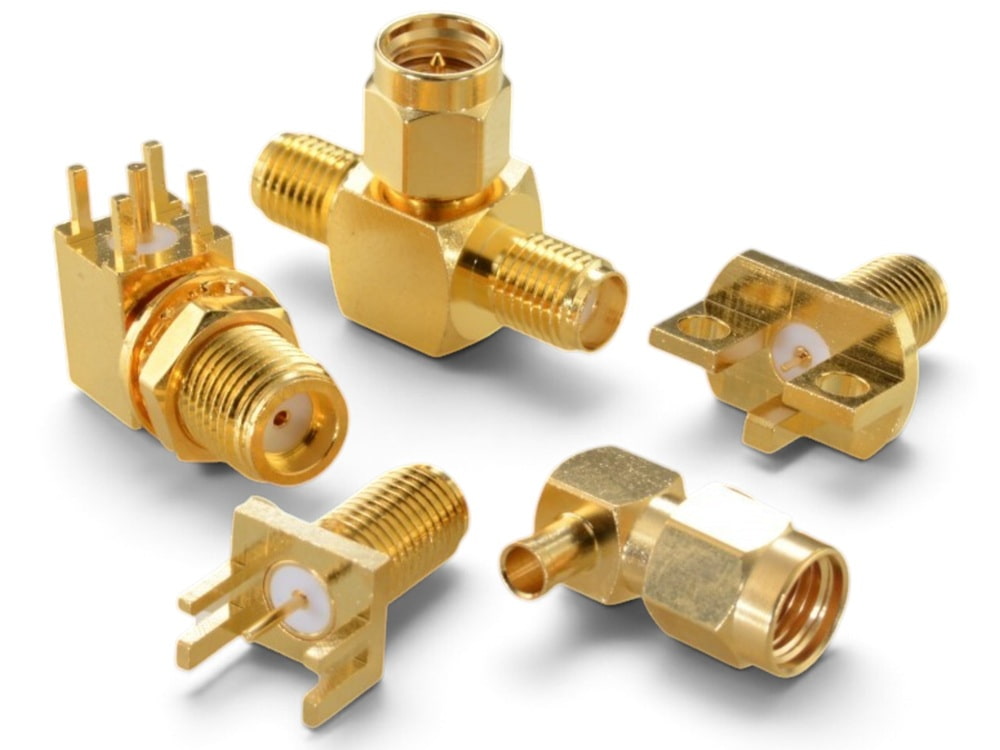
SMA adapters play a critical role in RF and microwave communications, ensuring smooth and highly reliable signal transmission between different devices. Due to the diversity of RF equipment, SMA to SMA connectors are widely used in wireless communications, radar, satellite communications, and other fields. This article introduces the characteristics, functions, and applications of SMA adapters, along with the structure, design, terminology, and installation recommendations for SMA to SMA connectors. It aims to assist in understanding the selection and usage of SMA to SMA connectors.
The SMA adapter is a critical accessory in RF equipment, featuring precision design and high frequency stability. It is extensively used in Wi-Fi, 5G, radar, satellite communications, RF testing, antenna systems, and IoT applications. Its high frequency transmission, stability, and interference resistance make it an indispensable tool for efficient connection and measurement devices.
An SMA adapter is a specialized connector designed for SMA connectors, enabling the connection of two SMA connectors facilitating compatibility with different connector series. It is commonly used in high frequency equipment to connect diverse devices or modules.
〈Related Articles:SMA Connectors - The Most Common RF Connectors〉
Key features of SMA adapters include precision thread design, frequency range, and impedance matching. Details follow are as follow.
〈Product Recommendations:SMA Connectors〉
| Parameter | SMA Connector | SMB Connector | SMP Connector | MMCX Connector |
|---|---|---|---|---|
| Structural Features | Threaded locking design for high stability. | Quick connection | Compact design, quick plug and unplug | Quick connect design |
| Frequency Range | DC to 18 GHz (High Precision models up to 26.5 GHz) | DC to 4 GHz | DC to 40 GHz (up to 65 GHz for select models) | DC to 6 GHz |
| Impedance | 50Ω | 50Ω | 50Ω | 50Ω |
| Material and Plating | Brass/Stainless Steel, Gold-Plated or Silver-Plated | Copper Alloy, Gold Plated | Stainless steel, copper alloy, gold-plated | Copper alloy, gold-plated |
| Durability | High, thousands of insertions/removals | Lower, suitable for low frequency applications | High, suitable for high frequency applications | Lower, suitable for small devices |
| Applicaiton | Wireless communication, RF measurement, antenna connections | Automotive electronics, industrial instruments, low frequency applications | High frequency communication, radar, satellite communication, etc. | Radio, Bluetooth, GPS, portable devices |
(Swipe left or right to view the full table.)
Below are the steps and precautions for correctly installing an SMA to SMA Connector. Ensure proper installation avoids over-tightening or damage. Test the connection quality and impedance matching of the SMA to SMA Connector, and briefly discuss its service life.
〈Related Articles:The Ultimate Guide to SMA Plug Connector Types and Specifications〉
SMA adapters and SMA to SMA connectors hold paramount importance in RF communications. Their high frequency characteristics, precision engineering, and low-loss properties make them the preferred choice for diverse wireless communication applications. Huang Liang Technologies specializes in the R&D and production of RF adapters and connectors, delivering high quality, highly stable RF solutions. With extensive technical expertise and a comprehensive product portfolio, we cater to diverse industry requirements. For further information about our products, please contact us. We will provide professional technical support and tailor-made solutions.
〈Related Articles:How Male SMA Connectors Drive Innovation in Global Tech?〉