Applications
- HOME
- Applications
- Blog
- A Complete Guide to MMCX Connectors: Applications, Benefits, and How to Choose

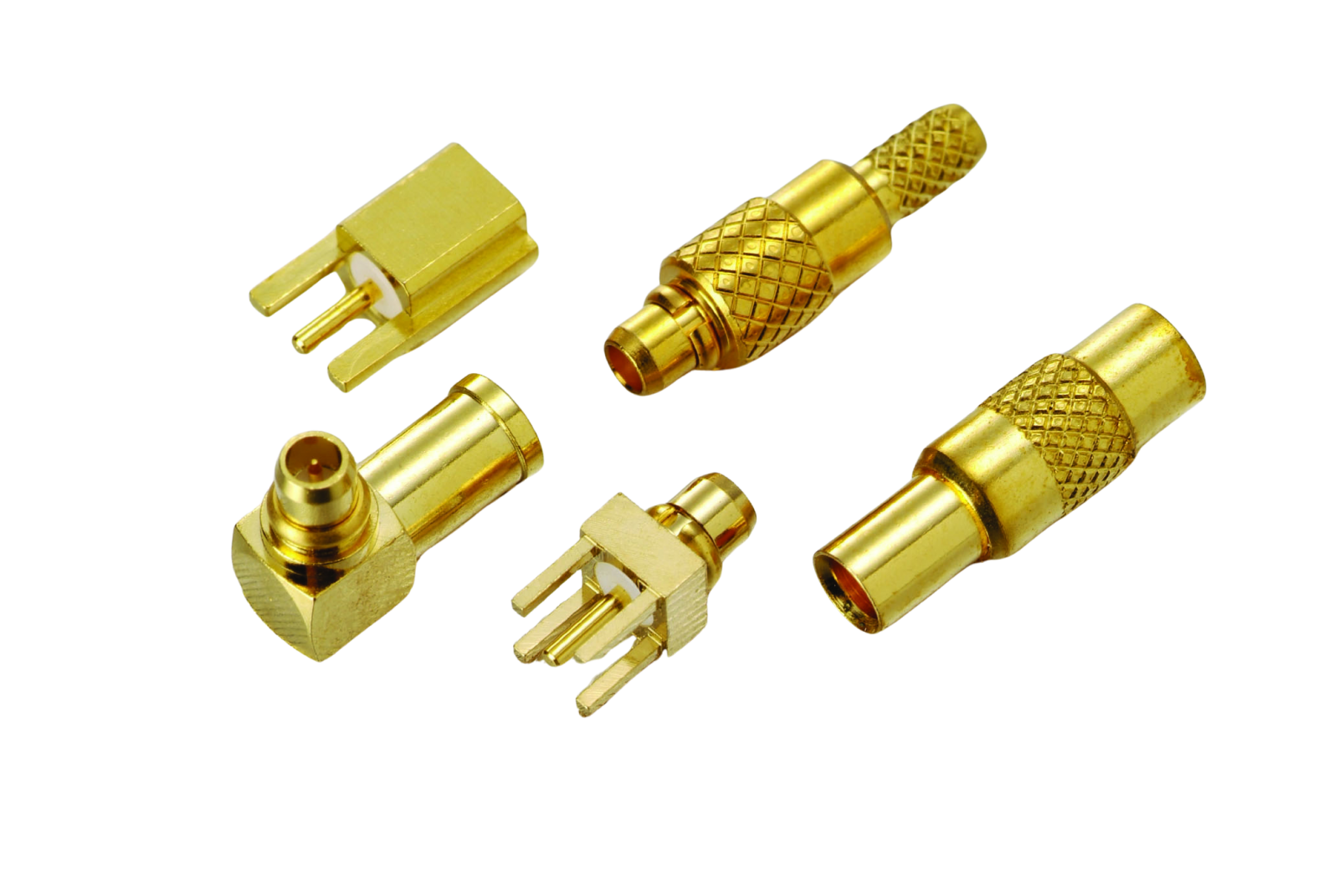
Electronic products continue to evolve toward smaller, thinner, lighter, higher frequency, and higher speed designs nowadays. The demand for miniature RF connectors is growing rapidly particularly in wireless communications, IoT devices, wearables, and high-end audio products. The MMCX Connector (Micro-Miniature Coaxial) has become an indispensable RF interface in modern high-density electronic systems due to its compact size, stable bandwidth, and quick connection capabilities. As a miniaturized version of the MCX connector, the MMCX connector is suited for applications with limited space requiring highly reliable signal transmission. It is widely used in GPS modules, wireless modules, detachable headphone cables, and medical devices. This article will delve into the structural characteristics, application domains, and installation considerations of the MMCX connector, highlighting its crucial role in RF design.
〈Related Articles: What are RF Connectors?〉
The MMCX connector is an extremely compact RF coaxial connector primarily used in wireless communication devices or electronic products where space savings are critical. It is a scaled-down version of the MCX connector, offering the same fundamental functionality but optimized for miniaturized equipment. Key features of the MMCX Connector include as below.
〈Related Articles: RF Coaxial Connector: A Key Component for Optimizing Microwave Communications〉
〈Recommended Products: MMCX Connectors〉
Due to its compact size, stable performance, and rotatable connection, the MMCX connector is widely used in various devices requiring high frequency signal transmission with limited space. Below are its primary application fields.
When using MMCX connectors for radio frequency (RF) signal connections, correctly distinguishing positive and negative terminals (polarity) is critical to ensure signal integrity and safe device operation. Details as follow.
The MMCX connector is a coaxial connector featuring a concentric design comprising two primary components: the central pin and the outer shell ground.
| Part | Function | Polarity |
|---|---|---|
| Inner Pin | Transmits primary RF signals (signal core) | Positive terminal (Signal/Hot) |
| Outer Shell | Provides shielding and grounding | Negative terminal (Ground/Shield) |
| Item | Description |
|---|---|
| Center Pin Identification | The plug end features a protruding metal pin (male connector), while the jack end has a corresponding receptacle (female connector), and this constitutes the positive signal transmission path. |
| Outer Shell Identification | The outer casings of plug and jack form a tight electrical grounding path. This connection must be secured to the ground wire (GND) or ground plane. |
| Notes | The center pin must not be misconnected or shorted to ground, as this will cause signal distortion, interference, or damage to the module |
(Swipe left or right to view the full table.)
| Issue | Result |
|---|---|
| Center Pin Misconnected or Misaligned | RF signal transmission failure or severe distortion. |
| Enclosure not Properly Grounded | Failure to shield noise, potentially causing EMI or signal interference. |
| Center Pin Shorted to Ground | Damage to transmitter module, driver circuitry, or even overheating/burnout. |
| Excessive Force or Incorrect Direction During Insertion/Removal | May break the center pin, rendering it unusable. |
(Swipe left or right to view the full table.)
Below is a comparison table of the MMCX connector versus three other common RF connectors such as SMA, MCX, and BNC. The table compares dimensions, frequency range, connection methods, and common applications.
| Characteristic | MMCX Connector | SMA Connector | MCX Connector | BNC Connector |
|---|---|---|---|---|
| Dimensions | Very small (approx. 3.5 mm diameter) | Compact (approx. 8 mm diameter) | Small (approx. 4.5 mm diameter) | Medium (Approx. 14.5 mm diameter) |
| Frequency Range | DC ~ 6 GHz | DC ~ 18 GHz (High quality up to 26.5 GHz) |
DC ~ 6 GHz | DC ~ 4 GHz (typically 0~2 GHz) |
| Connection Method | Snap-on | Screw-on | Snap-on | Bayonet |
| Mechanical Cycle | Approximately 500 insertions/removals | Approximately 500 insertions/removals | Approximately 500 insertions/removals | Approximately 500 insertions/removals |
| Impedance | 50 ohms | 50 ohms | 50 ohms or 75 ohms | 50 ohms or 75 ohms |
| Waterproof Performance | No special waterproof design | Waterproof models available depending on model | No special waterproof design | Generally no waterproof design |
| Primary Applications | Mobile devices, GPS modules, antenna modules | Test equipment, communication equipment, microwave modules | Mobile devices, wireless communication modules | Video equipment, laboratory test equipment |
| Installation Stability | General | High (screw-mounted) | Average | Moderate (bayonet mount) |
| Space Considerations | Ideal for space-constrained equipment | Suitable for relatively spacious environments | Suitable for medium space requirements | Not suitable for space-constrained equipment |
| Cost | Moderate to low | Medium to high | Moderate | Low to moderate |
(Swipe left or right to view the full table.)
〈Related Articles: SMA Connectors - The Most Common RF Connectors〉
When selecting an MMCX connector, evaluate based on the following criteria to ensure it meets your product's electrical, mechanical, and environmental requirements.
When selecting a high-end MMCX connector supplier, considerations extend beyond product performance to include the supplier's R&D capabilities, quality systems, and delivery reliability. We offer the following advantages across four key areas like technical, quality, production capacity/delivery, and technical support.
〈Recommended Products: MMCX Connectors〉
〈Related Articles: Top 5 Key Indicators for Choosing the Right RF Company to Boost Performance〉
In the ongoing trend toward miniaturization in modern communications and wearable devices, the MMCX connector plays an indispensable role. It achieves stable high frequency transmission in a compact form factor while significantly enhancing design and maintenance efficiency through its simple and rapid installation method. For developing small RF modules or products requiring antenna connectors, the MMCX connector offers an ideal solution balancing cost and performance.
Regardless of your communication application, Huang Liang Technologies provides comprehensive one-stop services including initial design, simulation, assembly instructions, and performance analysis to deliver optimal solutions. Contact us right away to receive professional simulation recommendations before mass production. This will help you achieve signal stability and reduce signal loss in commercial communications, giving you a competitive edge! Selecting the right connector and optimizing its design will effectively enhance overall system performance, driving microwave communication technology to new heights.
〈Related Articles: Microwave Communication: The Core Technology of Modern Technology and the Key Role of RF Connectors〉
〈Related Articles: Microwave Components Explained: Why These Little Things Matter BIG Time?〉