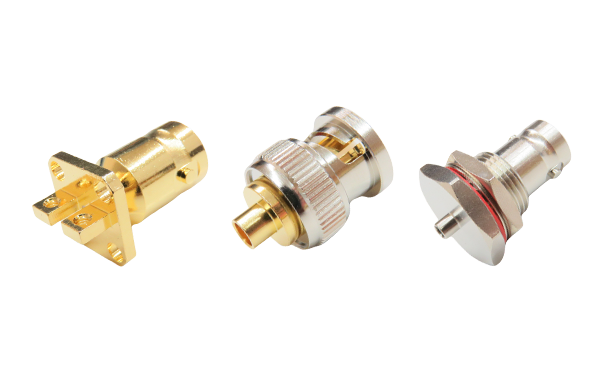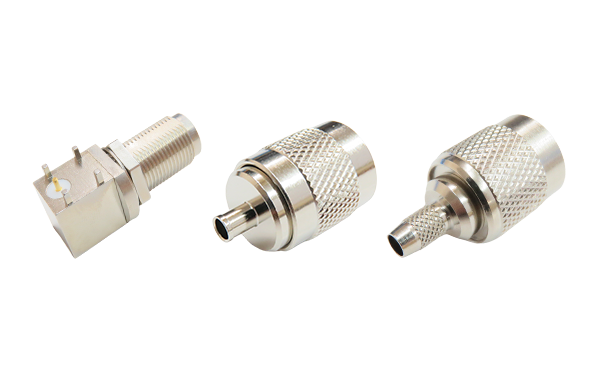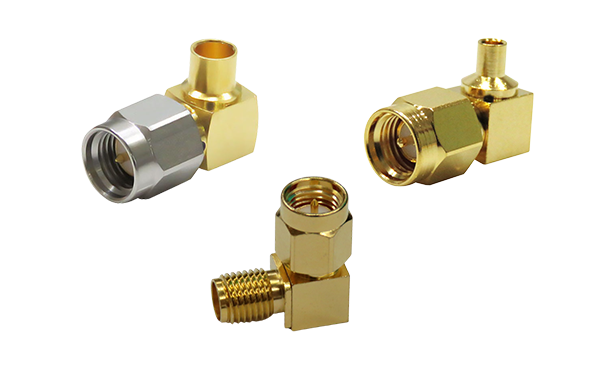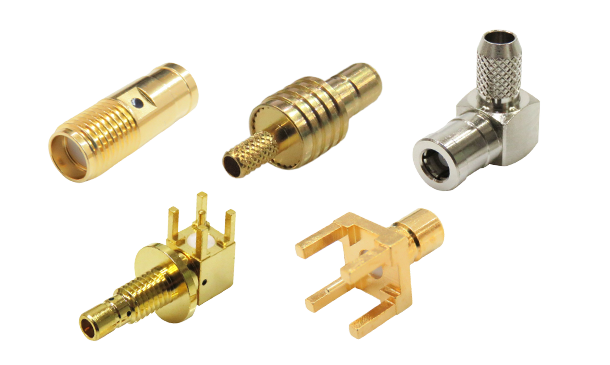
SMB connector (Subminiature Version B) is renowned for its compact size and fast mating capabilities in RF and communication equipment. It is widely used in GPS, automotive electronics, and modular devices. However, improper selection of an SMB connector can lead to signal reflection (decreased return loss), increased insertion loss, unstable contact, insufficient service life, or even a shortened device lifespan. This article takes a practical engineering approach to provide a comprehensive analysis of the key considerations for selecting SMB connectors and an overview of their application scenarios.
What is SMB Connector?
The SMB connector (Subminiature Version B) is a small-to-medium-sized coaxial RF connector that utilizes a Snap-on design.
Basic Specifications:
- Frequency Range: DC–4 GHz
- Impedance: 50Ω/75Ω
- Connection Type: Snap-on
- Structure: Coaxial design
Compared to SMA connectors, SMB connectors are smaller in size but have a lower frequency range.
What are the advantages of SMB connectors?
Why are SMB connectors widely used? They offer the following key advantages.
- Miniature RF Connector: The compact size of the SMB connector makes it ideal for high-density PCBs and space-constrained products.
- Quick Connect/Disconnect (Snap-on): No rotation is required for locking, significantly improving assembly efficiency.
- Cost-effectiveness: Compared to SMA connectors, SMB connectors offer a significant price advantage.
- Stable mid-frequency performance: The SMB Connector delivers excellent RF transmission quality at frequencies below 4 GHz.
What are the application areas for SMB connectors?
Due to its compact size, stable performance, and quick (Snap-on) connection, the SMB connector (Subminiature Version B) plays a crucial role in high-frequency signal transmission environments where space is limited. The following are common application areas for SMB connectors.
Wireless Communication and the Internet of Things (RF Modules / IoT Antennas)
In wireless communication equipment, SMB Connectors are commonly used for circuit board connections within base stations.
- Specific Applications: RF modules, Wi-Fi router antennas, and small cell base stations.
- Advantages: The quick-connect design significantly reduces assembly and maintenance time on production lines, which is critical for 5G miniaturized devices.
Automotive Electronics and Satellite Positioning (GPS/In-Vehicle Communications)
With the widespread adoption of autonomous driving and vehicle-to-everything (V2X) technology, demand for reliable, compact connectors has surged.
- Specific Applications: GPS satellite positioning systems, in-vehicle infotainment systems, and ADAS sensor connections.
- Advantages: SMB connectors provide stable 50Ω impedance transmission, ensuring navigation signals are not easily interrupted by vibration (although FAKRA is recommended for high-vibration areas, SMB is still widely used in internal modules).
Consumer Electronics and Audio-Visual Equipment
For audio-visual equipment designed to be slim and compact, SMB connectors offer space-saving advantages that traditional BNC connectors cannot match.
- Specific Applications: Set-top boxes, digital TV backplanes, and AV signal switchers.
- Advantages: The 75Ω SMB version perfectly supports digital audio and video signals while significantly saving PCB layout space.
Industrial Equipment and RF Test Systems
In environments requiring frequent switching of test lines or modular production, the SMB connector is the engineer’s top choice.
- Specific Applications: Internal connections in spectrum analyzers, industrial controllers, and RF test equipment.
- Advantages: The standardized mechanical structure complies with the MIL-STD-348 international standard, ensuring interoperability and durability across different brands of equipment.
How to Choose the Right SMB Connector?
Impedance Specifications
- The most common specifications for SMB connectors are 50ohm and 75ohm. Their primary applications are as follows.
- Impedance Matching: Select a 50ohm or 75ohm SMB connector based on system requirements. Please note that although 50Ω and 75Ω connectors look similar, mixing them can cause severe signal reflection. Typically, impedance mismatch will result in:
|
Impedance
Specifications
|
Main Applications of SMB Connectors
|
|
50ohm
|
Wireless communication, RF testing, antenna systems, GPS (most common) |
|
75ohm
|
Video transmission, broadcasting systems, digital audio/video |
- Signal reflection
- Increased VSWR
- Reduced transmission efficiency
Frequency Range
SMB connectors generally support: DC to 4 GHz, suitable for Wi-Fi, GNSS, and automotive RF applications. Therefore, when selecting a connector, ensure that the operating frequency band falls between DC and 4 GHz. If your application involves higher frequencies, consider the SMA series of Huang Liang Technologies. If the connector requires higher frequencies, we recommend as below.
- For frequencies above 4 GHz, we recommend SMA connectors.
- For requirements above 18 GHz, we recommend 2.92 mm connectors or higher-grade connectors.
Insertion Loss and Return Loss
Insertion loss and return loss are key parameters that directly affect the RF transmission efficiency and system stability of SMB connectors. SMB connector selection criteria as follow.
- Insertion Loss: Recommended ≤ 0.3 dB (at 3 GHz)
- Return Loss / VSWR: VSWR ≤ 1.3
Note: If the values are too high, it indicates poor connection quality.
Determining Polarity
When selecting an SMB connector, determining the polarity is the step with the highest error rate. Incorrect configuration will result in the cable failing to connect or equipment damage. Be sure to verify the following three specifications.
Physical Features: Features a center pin and an internal retractable push-in spring mechanism designed to engage with the female connector.
Physical characteristics: Features a central socket; the housing is typically a fixed cylindrical shape.
- Reverse Polarity (RP-SMB):
- Purpose: Primarily used in wireless communication devices (such as Wi-Fi antennas), this design complies with regulations restricting the arbitrary replacement of antennas.
- Recommendation: Before purchasing SMB connectors, be sure to verify the pin and socket specifications to avoid purchasing the wrong type due to misleading names.
Selecting the Orientation
SMB connectors typically come in two configurations; straight and right-angle. The appropriate SMB connector orientation must be selected based on the device’s spatial layout and PCB design. The correct choice not only affects assembly efficiency but also directly impacts signal integrity.
- Straight: Offers the shortest signal path and minimal transmission loss.
- Right Angle: Suitable for height-restricted or extremely confined spaces.
Power Handling
SMB connectors are specifically designed for low-to-medium power transmission. Their physical structure imposes limitations in high-voltage or high-current environments, typically at the level of a few watts (decreasing with frequency). They are not recommended for use in high-power transmitter front-ends or high-voltage power supply systems to prevent connector overheating or insulation breakdown. For high-power applications, we recommend switching to follows.
- SMA Connector: If compact size is required but higher power stability and a wider frequency range are needed, the SMA Connector is a suitable choice.
- N Connector: Designed for base stations or high-power communication equipment, it offers excellent power handling capacity and environmental resistance.
- TNC Connector: The ideal choice for environments with high vibration and power requirements slightly higher than those of an SMB.
Key Technical Parameters
When reviewing the SMB Connector datasheet, be sure to check the following key technical parameters.
- VSWR (Voltage Standing Wave Ratio): The closer to 1, the better the performance (recommended VSWR < 1.3).
- Insertion Loss: Ensure that energy loss during transmission remains within acceptable limits.
- Contact Resistance: Low resistance reduces heat generation and stabilizes the signal.
Mating Cycles
The SMB connector uses a snap-on push-in design, which offers convenient installation. However, frequent mating and un-mating can affect contact resistance.
- Standard Lifespan: The general standard specification is approximately 500 mating cycles.
- High-Quality Solutions: For equipment requiring frequent maintenance or module replacement, it is recommended to select models with a thicker gold plating on the center pin or those made of highly wear-resistant and flexible materials.
Materials and Environmental Adaptability
The materials used in SMB connectors directly affect their electrical performance and corrosion resistance; the installation environment must be considered during selection.
- Core Insulation: SMB connectors use low-loss PTFE (polytetrafluoroethylene) to ensure excellent insulation performance and thermal stability even at high frequencies.
- Housing Material: Nickel-plated Brass: Offers good conductivity and cost-effectiveness, suitable for general industrial environments. Stainless Steel: Provides higher mechanical strength and wear resistance.
- Solutions for Harsh Environments: If your equipment is to be deployed in high-temperature, high-humidity, or salt fog environments (such as maritime or outdoor base stations), please ensure the product has passed relevant environmental simulation tests (e.g., 48-hour or 96-hour salt spray tests) and select a surface treatment with stronger corrosion resistance.
SMB Connector FAQ (Frequently Asked Questions)
We have compiled the following expert answers to the most common selection questions faced by engineers and procurement professionals.
Q1: What is the difference between an SMB connector and an SMA connector?
|
Item
|
SMB Connector
|
SMA Connector
|
|
Frequecny
Range
|
DC-4GHz
|
DC-18GHz
|
|
Connection
Type
|
Snap-on
|
Threaded
|
|
Stability
|
Medium
|
High
|
Q2: Are SMB and SMA directly interchangeable?
Answer: No.
Although the two connectors are similar in size, their mechanical structures are completely different. The SMA connector uses a threaded locking mechanism, while the SMB connector uses a snap-on mechanism. Forcing the connectors together will damage their structures and result in signal transmission failure. If you need to connect the two, you must use a dedicated SMA-to-SMB adapter.
Q3: What is the difference between 50ohm and 75ohm SMB connectors? Can they be used interchangeably?
Answer: The main differences between SMB connectors lie in their internal structure and application scenarios. They must never be used interchangeably.
50ohm: Commonly used for wireless communication and data transmission.
75ohm: Commonly used in video transmission and broadcasting systems.
Mixing them will cause severe impedance mismatch, leading to significant signal reflection (increased return loss), which will affect system performance and may even damage the RF transmitter.
Q4: Are SMB connectors suitable for outdoor use?
Answer: Direct exposure to outdoor environments is not recommended.
SMB connectors are non-waterproof push-in designs with relatively poor shock resistance and sealing. If outdoor use is necessary, they must be installed within an IP-rated protective enclosure. If the application environment involves high-dynamic-demand scenarios such as unmanned aerial vehicles (UAVs) or base stations. It is recommended to switch to threaded locking and waterproof SMA or TNC connectors.
Q5: What is the maximum frequency that SMB can transmit?
Answer: It is generally recommended to use SMB for frequencies below 4 GHz.
Most standard SMB connectors have an operating frequency range of DC to 4 GHz. If the frequency exceeds 4 GHz, it is generally recommended to switch to SMA (which supports up to 18 GHz) to ensure signal quality.
Conclusion
In summary, SMB connectors have become indispensable components in wireless communications, automotive electronics, and RF test systems due to their compact size and quick-connect advantages. However, every detail from impedance selection and frequency limits to polarity determination affects system stability and service life.
As a professional connector manufacturer, Huang Liang Technologies possesses strong R&D capabilities and precision manufacturing processes. We offer a full range of high-quality SMB connectors whether standard, reverse polarity (RP) specifications, or custom products developed for special environments. All of which comply with the MIL-STD-348 international standard, ensuring superior electrical performance and durability. If you are seeking reliable RF connectivity solutions or have any technical questions regarding SMB connector selection, please feel free to contact us at any time. Our technical team will provide you with the most professional advice and product support.